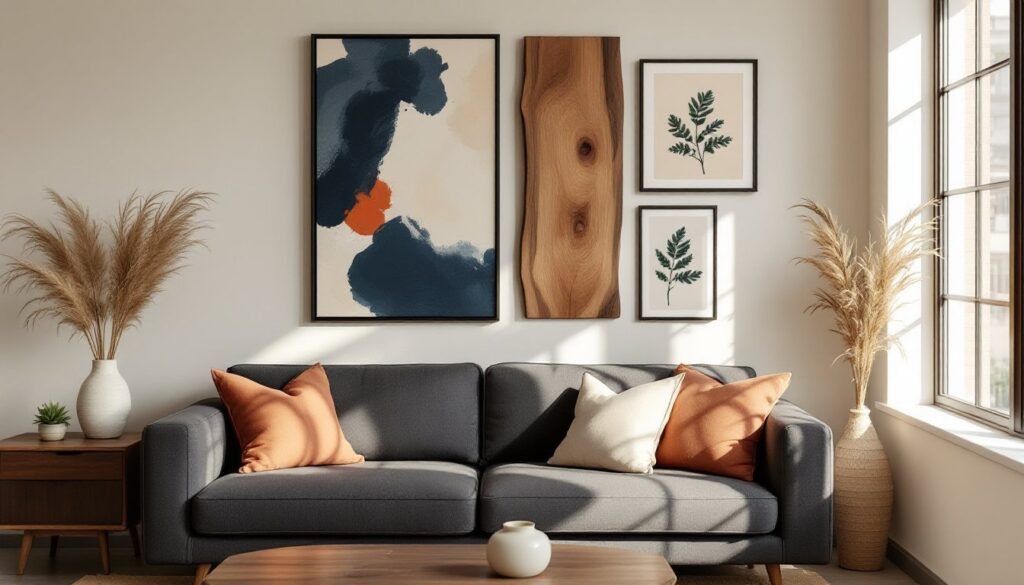
Bare walls make a room feel unfinished. But slapping up a generic poster or mass-produced canvas doesn’t fix the problem, it just fills space. The right wall art doesn’t just cover drywall: it sets the tone, anchors the room, and gives visitors something to talk about. Whether someone’s working with a builder-grade box or a century-old parlor, the walls are the largest blank canvas in the house. This guide walks through practical, creative approaches to filling that space with art that actually reflects personality and elevates the living room without blowing the budget or requiring a design degree.
Table of Contents
ToggleKey Takeaways
- Unique wall art ideas for living rooms define visual hierarchy, establish color schemes, and anchor the space by introducing intentional contrast through texture, scale, or subject matter rather than generic decoration.
- DIY wall art projects like framed fabric panels, wood scrap mosaics, and abstract canvas paintings can be completed for under $50 while guaranteeing one-of-a-kind pieces that reflect personal style.
- Biophilic design through pressed botanical frames, driftwood installations, and live edge wood slabs brings natural elements indoors to improve mood and reduce stress in living spaces.
- Gallery walls succeed by combining two to three frame finishes, mixing art types (photography, prints, textiles, and 3D objects), and maintaining 2-3 inches of spacing between frames for visual cohesion without monotony.
- Statement pieces sized at two-thirds to three-quarters of sofa width create stronger room anchors than multiple small artworks, especially in open-concept living areas.
- Heavy wall art installations over 40 pounds require mounting directly into studs or heavy-duty fasteners like toggle bolts, with two mounting points minimum for horizontal stability and safety.
Why Unique Wall Art Makes All the Difference
Wall art defines the visual hierarchy of a living room. It pulls the eye up, balances furniture arrangements, and establishes color schemes that tie together disparate elements like throw pillows, rugs, and upholstery. Generic art feels invisible because it lacks specificity, there’s nothing for the brain to latch onto.
Unique pieces work because they introduce texture, scale, or subject matter that contrasts with the room’s existing materials. A living room dominated by soft textiles benefits from hard-edged geometric prints or metal sculptures. A minimalist space with clean lines can handle organic, asymmetrical pieces. The key is intentional contrast, not random decoration.
From a practical standpoint, wall art also solves acoustic problems. Large canvas pieces, fabric hangings, and wood installations absorb sound better than bare drywall, reducing echo in rooms with high ceilings or hardwood floors. This isn’t a replacement for dedicated acoustic panels, but it’s a secondary benefit worth considering in open-concept homes.
DIY Wall Art Projects That Cost Less Than $50
Building custom wall art is cheaper than buying it and guarantees no one else has the same piece. These projects require basic tools and minimal skill.
Framed Fabric Panels
Stretch decorator fabric over 1×2 pine furring strips assembled into a frame. Staple the fabric to the back using a staple gun, pulling taut at corners first, then midpoints. Three 24×36-inch panels in coordinating patterns create a triptych for under $40 in materials. This works especially well with vintage textiles, remnants from upholstery projects, or bold geometric prints.
Wood Scrap Mosaics
Cut scrap lumber, 2×4s, 1×6s, plywood offcuts, into uniform lengths (6-8 inches works well). Sand edges smooth with 120-grit paper, then arrange pieces in a geometric pattern on a plywood backer. Vary the wood species or stain sections in different tones for contrast. Attach with wood glue and finish nails, then mount the assembly with French cleats for a clean, floating look. Total cost: $20-35 depending on scrap availability.
Large-Scale Abstract Canvas
Buy a 36×48-inch stretched canvas ($25-30 at craft stores) and use interior paint samples in coordinating colors. Apply with a 4-inch chip brush in bold, overlapping strokes. The trick is working wet-on-wet and leaving visible brushstrokes, perfection kills the energy. Let it dry flat to avoid drips. Seal with matte acrylic sealer if desired.
Rope and Dowel Wall Hangings
Thread dyed cotton rope or macramé cord through drilled holes in a 1-inch diameter dowel. Knot at varying lengths to create a cascading effect. This brings texture to smooth walls and complements modern or bohemian interiors. Material cost: $15-25.
Nature-Inspired Art: Bringing the Outdoors Inside
Biophilic design, incorporating natural elements, improves mood and reduces stress. Wall art is one of the easiest ways to apply this principle without adding live plants or water features.
Pressed Botanical Frames
Press leaves, ferns, or wildflowers between parchment paper under heavy books for 2-3 weeks. Once flat and dry, arrange them on acid-free mat board and seal under glass in simple 11×14-inch or 16×20-inch frames. Group three to five frames in a grid for impact. This works best with high-contrast specimens, dark leaves on cream mats or pale flowers on charcoal.
Driftwood and Branch Installations
Mount a substantial piece of driftwood or a stripped branch horizontally on the wall using heavy-duty picture hangers rated for 50+ pounds. Sand rough bark and seal with clear polyurethane if shedding is a concern. This creates a sculptural focal point and pairs well with minimalist or coastal-themed rooms. Natural variations in interior design aesthetics often feature organic materials like these for grounding contemporary spaces.
Live Edge Wood Slabs
A single walnut, cherry, or maple live edge slab (24-36 inches long, 10-12 inches wide) can serve as standalone art when mounted vertically or horizontally. Apply a coat of Watco Danish Oil or tung oil to bring out grain depth without adding gloss. Attach using keyhole hangers routed into the back. Cost varies, $40-100 depending on species and source, but the impact is significant.
Stone and Mineral Displays
Mount polished geode slices, agate slabs, or slate tiles in shadow box frames. The natural color variation and crystalline structures add dimension. This approach works particularly well in modern or industrial interiors where organic irregularity contrasts with clean lines.
Gallery Walls Done Right: Mixing Frames and Styles
Gallery walls fail when they’re either too matchy or too random. The goal is intentional variety within a controlled framework.
Frame Selection Strategy
Stick to two or three frame finishes, black, natural wood, and white covers most bases. Mix frame widths (thin 1-inch profiles with chunky 3-inch frames) but keep the mat color consistent, usually white or off-white. This creates visual cohesion without monotony.
Layout Planning
Cut kraft paper templates matching each frame’s outer dimensions. Tape them to the wall in different arrangements until the composition feels balanced. Aim for roughly equal visual weight on either side of an imaginary centerline. Leave 2-3 inches between frames as a general rule, closer feels cluttered, wider loses connection.
Mixing Art Types
Combine photography, prints, textiles, and three-dimensional objects. A gallery wall might include framed vintage maps, a small woven wall hanging, black-and-white family photos, and a shadow box with collected items. The mix prevents the eye from glazing over.
Installation Method
Locate studs with a stud finder and use #8 wood screws driven into studs whenever possible. For drywall-only mounting, use threaded drywall anchors rated for 50 pounds per frame. Gallery walls often span 6-10 feet horizontally, so hitting at least two studs provides critical stability. Start with the center frame at 57-60 inches to center (standard gallery height) and work outward.
Common Mistakes
Hanging frames too high (bottoms should relate to furniture height, not ceiling), using wire hangers that allow shifting, and overcrowding the composition. Less is often more, eight well-chosen pieces beat twenty mediocre ones.
Statement Pieces: Large-Scale Art for Bold Impact
A single oversized piece anchors a room faster than multiple small ones. This is especially effective in open-concept spaces where the living room bleeds into dining or kitchen areas.
Sizing Guidelines
For art above a sofa, aim for two-thirds to three-quarters the sofa’s width. An 84-inch sofa pairs well with a 56-60-inch wide piece. Too small looks timid: too large overwhelms. Leave 6-8 inches of clearance between the top of the sofa back and the bottom of the frame.
Affordable Large-Scale Options
Prints on paper or canvas run cheaper than originals. Retailers offer 40×60-inch canvas prints for $100-200. Alternatively, commission a local art student for a fraction of gallery prices. Specify dimensions, general color palette, and style (abstract, landscape, figurative) but allow creative freedom, rigid direction kills spontaneity.
Tapestries and Textile Art
Large woven wall hangings add warmth and absorb sound. Mount them on a 1×2 wood cleat secured to studs, with the top edge folded over and sewn to create a rod pocket. This method distributes weight evenly and prevents sagging. Many global design portfolios feature textile art as a primary focal element in contemporary living spaces.
Mirrors as Art
An oversized mirror, particularly one with an architectural or decorative frame, functions as both art and light amplification. Position it opposite windows to bounce natural light deeper into the room. Secure with mirror clips and wall anchors: mirrors are heavy, typically 1-2 pounds per square foot for standard glass.
Installation Considerations
Pieces over 40 pounds require mounting directly into studs or using toggle bolts rated for 100+ pounds in drywall. Always mount two points minimum for horizontal stability. French cleats are ideal for heavy art, they’re self-leveling and distribute load across a larger wall area.
Unexpected Materials and Textures for Modern Living Rooms
Breaking away from traditional framed art opens up possibilities that add architectural interest, not just decoration.
Metal Wall Sculptures
Copper, steel, and aluminum wall pieces introduce industrial texture. Look for geometric designs or abstract forms that cast interesting shadows. Mount using masonry anchors if working with brick or concrete accent walls. Metal art works particularly well in spaces with exposed ductwork, concrete floors, or steel-framed windows, it echoes existing materials.
3D Wood Installations
Layered wood pieces in varying depths create dramatic shadow play. Cut 1×4 or 1×6 pine boards into geometric shapes, hexagons, parallelograms, triangles, and mount them at different distances from the wall using spacers (small blocks or multiple washers behind screws). Stain or paint in graduated tones for added complexity. This project requires a miter saw for clean angles and a drill/driver for mounting.
Floating Shelves as Art Platforms
Instead of hanging art, install floating shelves in an asymmetrical arrangement and rotate smaller art objects, ceramics, or sculptural pieces seasonally. This approach suits collectors and allows flexibility. Use heavy-duty floating shelf brackets rated for the expected load, books and ceramics add up fast.
Reclaimed Materials
Old window frames, barn doors, shutters, and architectural salvage work as statement pieces. Clean thoroughly, stabilize loose joints with wood glue, and seal with polyurethane if the piece will be handled. Architectural elements often exceed 50 pounds, so lag bolts into studs are non-negotiable. Some interior designers following current home styling approaches integrate salvaged materials to add historical depth to modern builds.
Concrete and Plaster Reliefs
Cast shallow geometric or organic shapes in concrete or plaster using silicone molds. Once cured, mount on painted backing boards. The monochromatic texture reads as sculptural art. This is an intermediate project requiring Portland cement or plaster of Paris, safety gear (dust mask, gloves), and basic mold-making supplies. Seal finished pieces with concrete sealer to prevent dusting.
Safety Note
When working with heavy or unconventional materials, always verify wall construction. Drywall alone won’t support pieces over 20 pounds without proper anchors. If unsure whether a wall is load-bearing or contains critical utilities, consult a professional before drilling large holes or driving heavy fasteners.
Conclusion
Wall art stops being decoration when it reflects actual thought and effort. Whether someone builds a piece from scrap lumber, curates a gallery wall over months, or invests in one bold statement piece, the goal is the same: make the walls feel deliberate. Skip the filler. Measure twice. Use the right hardware. And remember that blank walls aren’t a problem, they’re just waiting for the right solution.