Designing a living room in a tiny house isn’t just about cramming furniture into a smaller footprint, it’s about rethinking how each square foot functions. With homes under 400 square feet becoming more common, especially as the modern prefab movement grows, every decision carries more weight. A sofa that doubles as storage, a wall color that visually expands the room, or a layout that keeps traffic flowing without tripping over the coffee table can make or break the space. This guide walks through the practical design strategies, furniture picks, and layout tricks that turn a cramped living area into a comfortable, functional hub.
Table of Contents
ToggleKey Takeaways
- Tiny house living rooms require multifunctional furniture like storage ottomans, sofa beds, and fold-down desks to maximize limited floor space and maintain traffic flow.
- Light, neutral wall colors and monochromatic schemes visually expand compact spaces while layered lighting (overhead, task, and accent) eliminates shadows and creates flexibility.
- Anchor furniture against walls and maintain 24–30 inches of clearance for pathways rather than floating pieces in the center of a tiny house living room.
- Vertical storage through floating shelves, recessed niches, wall hooks, and pegboards eliminates clutter without consuming precious floor area.
- Mirrors, single focal points, and a restricted decor palette—rather than multiple statement pieces—preserve the open, uncluttered aesthetic essential to small-space design.
- Position the living area near the largest windows and use sheer curtains or cellular shades to maximize natural light, which is the most effective tool for making small spaces feel larger.
Why Tiny House Living Rooms Require a Different Design Approach
Standard living room design rules don’t scale down well. In a typical home, you might dedicate 200–300 square feet to a living room, leaving room for a full-size sofa, accent chairs, end tables, and a media console. In a tiny house, the entire footprint might be 100–250 square feet total, with the living area occupying just 40–80 square feet.
That constraint forces a shift from decorating to problem-solving. Every piece of furniture needs to justify its presence, either by serving multiple functions or by being compact enough to preserve circulation space. The IRC (International Residential Code) requires habitable rooms to have a minimum ceiling height of 7 feet over at least 50% of the floor area, with portions allowed to drop to 5 feet under lofts or sloped roofs. This means many tiny house living rooms sit beneath sleeping lofts, creating vertical challenges alongside horizontal ones.
Another factor: tiny houses often rely on RV-style construction or lightweight framing to stay within towing weight limits (typically 10,000–13,500 pounds for a trailer). That means wall studs are often 16 inches on center but may use lighter lumber or metal framing, limiting the load capacity for heavy shelving or mounted furniture. Always check the framing and use appropriate anchors, toggle bolts or blocking between studs, when mounting anything heavier than a picture frame.
The result is a design process that prioritizes flexibility, vertical storage, and visual continuity over the traditional “anchor piece” approach. Instead of building around a statement sofa, tiny house living rooms build around movement, light, and multipurpose zones.
Smart Furniture Choices That Maximize Every Inch
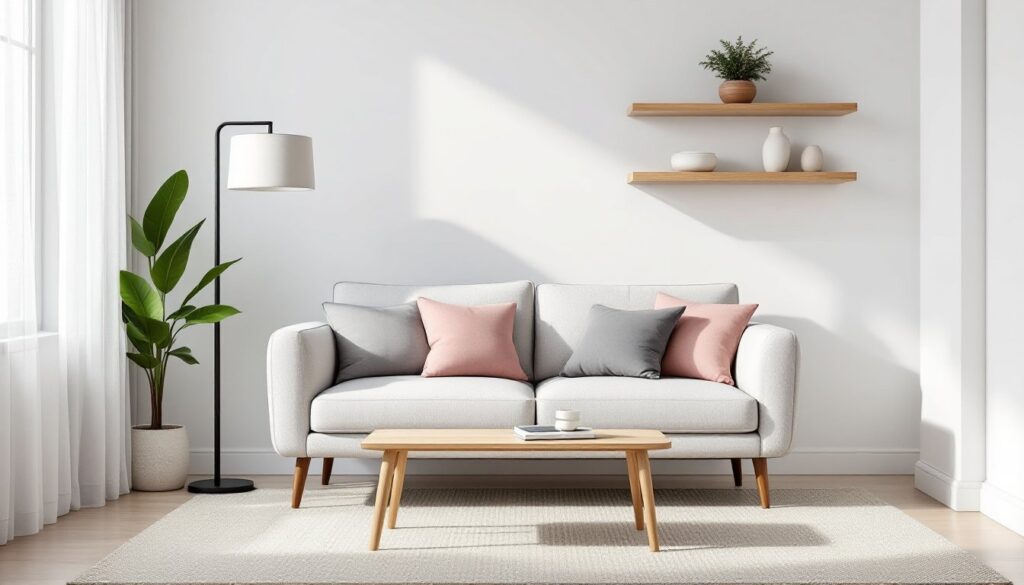
Furniture selection in a tiny living room starts with one question: Does this piece do more than one thing? A standard 84-inch sofa eats up half the floor space in a 60-square-foot room, leaving little room for anything else. Swapping it for a loveseat (48–60 inches wide) or a futon-style sofa that converts to a sleeping surface immediately opens up options.
Look for pieces with built-in storage. Ottomans with removable tops, coffee tables with drawers or lift-top mechanisms, and sofas with under-seat compartments all provide hidden space for blankets, books, or seasonal items. A storage bench placed under a window can double as seating and hold anything from shoes to tools.
Wall-mounted or folding furniture is another workhorse. A drop-leaf table attached to the wall serves as a dining surface, workspace, or serving area, then folds flat when not in use. Murphy-style desks or fold-down shelves can create temporary work zones without permanent floor commitments.
Avoid furniture with exposed legs or bulky bases. Platform-style pieces or furniture with legs under 4 inches tall visually recede and make the floor plane look larger. A low-profile sofa (seat height around 16–18 inches instead of the standard 19–21 inches) keeps sightlines open and reduces visual mass.
Multi-Functional Pieces That Work Double Duty
Investment-grade multifunctional furniture pays off quickly in tight quarters. A sofa bed or sleeper chair turns the living room into guest quarters without dedicating a separate bedroom. Look for mechanisms that don’t require pulling the piece away from the wall, click-clack futons or trifold designs work better in limited clearance.
Nesting tables (a set of 2–3 tables that stack together) provide surface area when needed but collapse to the footprint of the largest table when not in use. Similarly, stackable stools or folding chairs can be stored vertically in a closet or hung on wall hooks.
A bookshelf room divider (open on both sides) can separate the living area from a kitchen or office nook while providing storage and maintaining light flow. Choose units around 30–36 inches tall to preserve sightlines and avoid cutting the room in half visually.
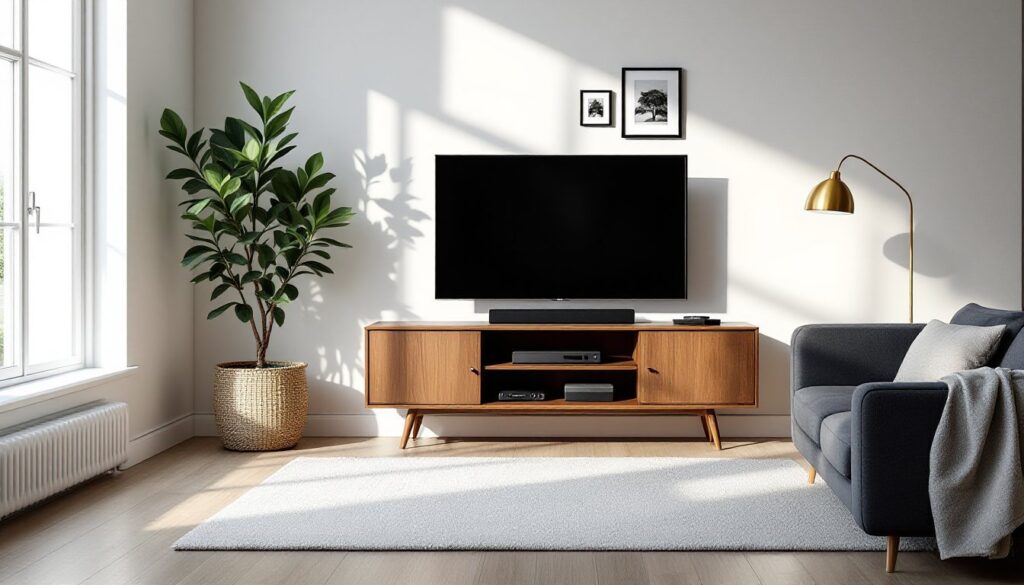
For media storage, a TV console with integrated shelving eliminates the need for separate bookcases. Mount the TV itself on an articulating arm to free up surface space and allow the screen to tuck against the wall or swing out for viewing from different angles.
Color and Lighting Strategies to Make Your Space Feel Larger
Paint color is one of the cheapest, highest-impact tools for expanding a small space visually. Light, neutral tones, whites, soft grays, warm beiges, reflect more light and push walls back perceptually. A gallon of quality interior paint covers roughly 350–400 square feet per coat, so a tiny house living room might need just one gallon for two coats on all walls.
Monochromatic schemes (walls, trim, and ceiling in the same color family) eliminate visual breaks and create a continuous envelope. This works especially well in spaces with low ceilings or odd angles, where contrasting trim would draw attention to constraints.
If color is important, use it as an accent on a single wall or through removable elements like throw pillows, rugs, or artwork. Painting the ceiling a shade lighter than the walls can add a sense of height, while a darker floor (or dark-stained wood) grounds the space without shrinking it.
Lighting layers are critical. Relying on a single overhead fixture creates harsh shadows and flattens the room. Instead, combine:
- Overhead lighting (flush-mount LED fixture, 800–1000 lumens for a small living room)
- Task lighting (adjustable reading lamp, under-shelf LED strips)
- Accent lighting (wall sconces, picture lights, or LED rope lights along baseboards)
Dimmer switches on overhead lights allow flexibility between bright task lighting and softer ambient settings. Many tiny houses run on 12V DC systems (especially off-grid builds), so confirm fixture compatibility before purchasing.
Natural light is the best expander. If the build allows, position the living area near the largest windows. Avoid heavy curtains, opt for sheer panels or cellular shades that provide privacy without blocking light. Designers at publications focused on modern architecture often emphasize maximizing glazing in compact builds to blur indoor-outdoor boundaries and amplify perceived space.
Clever Storage Solutions for Clutter-Free Tiny Living Rooms
Storage in a tiny living room has to be vertical, hidden, or both. The most overlooked real estate is the upper 12–18 inches of wall space near the ceiling. Install floating shelves or a picture rail system to store books, decor, or baskets without consuming floor area. Use shelves at least 8 inches deep to hold standard paperbacks or storage bins.
Recessed niches between wall studs (typically 14.5 inches wide between 16-inch-on-center framing) can be carved out during construction or retrofit for shallow storage, perfect for remotes, chargers, or small decor items. If you’re cutting into drywall post-build, verify no electrical or plumbing runs behind the wall first.
Under-furniture storage is essential. Sofas and chairs on taller legs (6–8 inches clearance) allow for rolling bins or flat storage boxes underneath. A bed platform in a sleeping loft can incorporate drawers accessed from the living area below.
Hooks and pegboards turn vertical surfaces into active storage. A pegboard panel (4×4 feet or custom-cut) mounted above a sofa or desk holds everything from tools to kitchen utensils, and the layout can shift as needs change. Use 2-inch screws into studs or backing板 to support heavier loads.
Magnetic strips on metal surfaces (like the side of a tiny house trailer frame or a steel cabinet) can hold knives, scissors, or small tools. Tension rods inside cabinets create extra shelves for cleaning supplies or pantry items.
Many home organization tips recommend the “one in, one out” rule: for every new item brought into the space, remove one. In a tiny house, this isn’t just advice, it’s a survival strategy.
Layout and Flow: Arranging Furniture in Limited Square Footage
Furniture placement in a tiny living room starts with traffic flow. Measure and map primary pathways, entrance to kitchen, living area to bathroom, ladder to sleeping loft, and maintain at least 24–30 inches of clearance. Anything less forces sideways shuffling or constant furniture contact.
Anchor furniture against walls to keep the center open. Floating a sofa in the middle of the room works in a 300-square-foot space: in a 60-square-foot space, it’s a roadblock. Push larger pieces to the perimeter and use smaller, movable items (ottomans, stools, folding chairs) to fill in as needed.
Create zones even in open-plan layouts. A small rug defines the seating area: a different floor material (like vinyl plank vs. tile) can signal a transition to the kitchen. Use furniture orientation to reinforce zones, a sofa facing away from the kitchen creates a psychological boundary without a physical wall.
Avoid matching furniture sets. A loveseat plus two lightweight chairs offers more layout flexibility than a three-piece sectional. Chairs can be moved for cleaning, repositioned for conversation, or relocated entirely when the space needs to flex for other uses.
Consider diagonal placement if the room shape allows. Angling a sofa across a corner can create a more dynamic layout and sometimes increases usable seating area by utilizing otherwise dead space.
Vertical sight lines matter as much as floor plan. Keep the tallest furniture (shelving, cabinets) against one wall rather than distributing it evenly around the room. This prevents a “boxed in” feeling and maintains at least one open, tall visual plane.
Decor and Styling Tips That Add Personality Without Overwhelming
Decorating a tiny living room is a balancing act between personality and restraint. Too little, and the space feels sterile: too much, and it reads as cluttered. Start with a single focal point, a piece of artwork, a large window, a textured accent wall, and build around it rather than competing with multiple statement pieces.
Mirrors are the oldest trick for a reason. A large mirror (24×36 inches or bigger) opposite a window reflects natural light and visually doubles the space. Frameless or slim-framed mirrors feel less busy than ornate frames. Leaning a floor mirror against a wall instead of hanging it adds a casual, less permanent vibe and avoids drilling into studs.
Textiles add warmth without bulk. A single, well-chosen area rug (5×7 feet or smaller) anchors the seating area and introduces color or pattern. Stick to low-pile rugs (under 0.5 inches) to avoid tripping hazards and make furniture movement easier.
Plants bring life into tight quarters, but go vertical. Wall-mounted planters, hanging pots, or a ladder shelf with potted herbs keep greenery off valuable surfaces. Choose low-maintenance varieties (pothos, snake plant, succulents) that tolerate indoor light conditions.
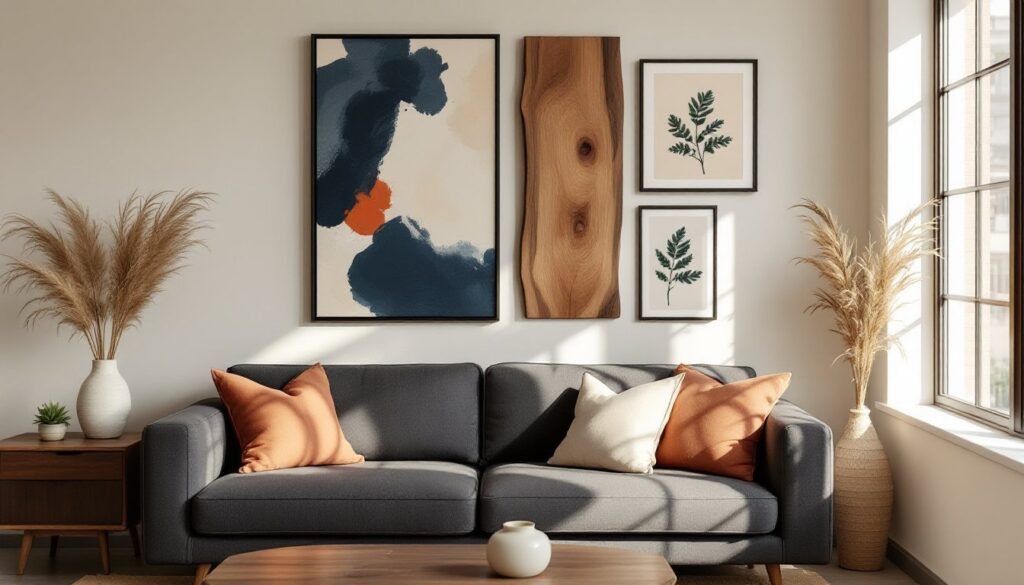
Artwork and wall decor should be appropriately scaled. One large piece (18×24 inches or bigger) reads better than a gallery wall of tiny frames, which can fragment the visual field. If a gallery wall appeals, keep frames uniform in color and spacing tight (2–3 inches apart) for cohesion.
Styling advice from small space living ideas often emphasizes editing ruthlessly: display three favorite items instead of ten, rotate decor seasonally, and keep surfaces as clear as possible. In a tiny house, every visible object contributes to either calm or chaos, choose accordingly.
Avoid heavy window treatments or oversized furniture that visually weighs down the room. Instead, use lightweight fabrics, transparent materials (acrylic, glass), and open-frame furniture that lets light and sightlines pass through. The goal is to make the room feel airy and unobstructed, even when every inch is working hard.